The journey to life · chapter 10
The Embryo Week by Week: Weeks 4 to 10
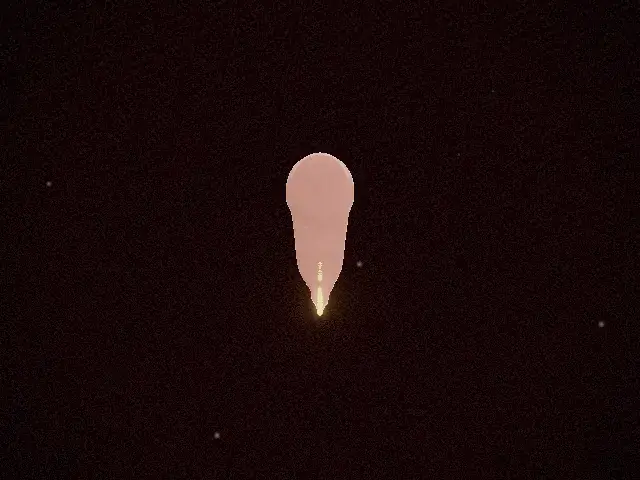
In six weeks a flat disc of cells becomes a tiny person. First the disc grows a third layer, then it folds and curls into a C. A groove down its back zips shut into a tube that will become the brain and the spinal cord. A small tube in the chest starts to twitch, and then to beat. Little buds sprout where the arms and legs will be, grow into paddles, and then fingers and toes appear. The head swells, and the eyes, ears, nose and mouth take form. The tail fades away. By the end the embryo is about 3 centimetres long, with a face and a beating heart, and almost every organ has begun. That is why these are the most delicate weeks. (Doctors count a pregnancy from the first day of the last period, about two weeks before fertilisation, so "week 10" here is eight weeks after the journey began.)
- Where
- Uterus · the amniotic sac
- How long
- Week 4 to week 10 of pregnancy
In numbers
- MeasuredThree layers of cells form about 15–17 days after fertilisation
- MeasuredThe groove down the back closes into the neural tube about days 25–28 after fertilisation (week 6)
- MeasuredThe heart starts to beat about day 22 after fertilisation (week 5); a scan can usually see it from week 6
- MeasuredLength, crown to rump: about 2 mm at week 5, 16 mm at week 8, 33 mm at week 10
- EstimateWeight at week 10: a few grams
- DrawnThe shape is drawn from references; its size is true
Every number is labelled measured, an estimate or drawn: how we know.
The science
About 15–17 days after fertilisation (week 4 to 5 of pregnancy) the two-layered disc makes a third layer, the mesoderm, by gastrulation: cells stream in through a groove, the primitive streak, and spread between the other two. The three layers, ectoderm, mesoderm and endoderm, give rise to every tissue of the body. The ectoderm along the midline thickens into the neural plate, whose edges rise as folds, meet and fuse, starting near the neck and zipping towards both ends; the openings at the head and the tail close by about day 25–28 after fertilisation. If they do not, the result is a neural tube defect such as spina bifida; folic acid taken before and in early pregnancy lowers that risk. The disc folds lengthways and sideways into a curled, tube-like body. The heart forms from two tubes in the mesoderm that fuse, loop into an S and begin to contract about day 22 after fertilisation, the first organ to work; a scan can usually see it by week 6, beating at about 100 times a minute and rising to about 170 by week 9. Arm buds appear about day 26–27 after fertilisation and leg buds a day or two later; hand plates form about day 33 and finger rays about day 41, and the fingers part as the cells between them die back, by about day 53. The face forms from swellings under the brain, the pharyngeal arches. The embryonic period ends at the end of week 8 after fertilisation (week 10 of pregnancy); after that the embryo is called a fetus. Many pregnancies end in these weeks: about 1 in 8 known pregnancies ends in miscarriage, most in the first twelve weeks, often because the chromosomes did not sort properly, and almost never because of anything the mother did.
In Endo-View
This is chapter 10 of the journey to life, an interactive 3D simulation at true scale: watch it, slow it down or run it at real speed, and read every number with its label.
The other chapters
What Happens to Sperm After Ejaculation How Sperm Get Through the Cervix: Cervical Mucus Sperm in the Uterus: The Race and the White Blood Cells Sperm in the Fallopian Tube: Waiting for the Egg The Human Egg Cell: Its Size and Its Layers How Fertilisation Works: Sperm Meets Egg The Zygote and the First Cell Divisions What Is a Blastocyst? Days 3 to 6 How Implantation Works: Days 6 to 12 The Fetus from Week 10 to Week 20 Pregnancy Week by Week: The Fetus to Week 40 How Birth Works: Labour and the First Breath
More of the body
The heart and blood vessels The lungs and airways The digestive system The kidneys and the urinary system The brain and the nervous system